Chariot
0
You may also like




The conversation around jewelry buying has changed. Quietly but decisively, the question has shifted from what does it look like? to what does it stand for?
A 2025 survey by The Plumb Club found that 78% of US jewelry consumers say their knowledge of a brand's responsible business practices directly influences their purchase decisions. Almost half say they'd pay "a lot more" for jewelry they can verify as responsibly sourced — and 41% say they're unlikely to buy from a brand they can't confirm as responsible. The underlying current runs even deeper globally: a World Gold Council study of over 18,000 consumers across six countries found that 70% of gold jewelry buyers want pieces produced with minimal environmental impact and fair working conditions.
Here's the problem: the conscious luxury conversation in jewelry has a blind spot. It almost always defaults to fine jewelry — conflict-free diamonds, Fairtrade gold, traceable gemstones. That's important. But it leaves out an enormous segment of the market — fashion-fine and gold-plated jewelry, where most daily-wear pieces live. If you're shopping in this space, the ethical framework you need isn't the same as the one for a diamond ring. And almost no one has built it for you.
This is that guide. Here's what conscious luxury actually means when you're buying gold jewelry — what to look for, what to ask, and what it looks like when a brand has built its values into its structure, not just its storytelling.
The term has started to earn skepticism — and rightly so. When every jewelry brand claims to "care about the planet" and "give back to community," the words lose their edge. But behind the marketing noise, the concept describes something real: a purchase that refuses to trade quality for values, or values for beauty.
In fine jewelry, conscious luxury tends to mean responsibly mined or lab-grown stones, recycled precious metals, certified Fairtrade gold, and supply chains that can be traced from origin to finished piece. These are meaningful, verifiable standards. But they don't map cleanly onto gold-plated jewelry, which operates on different materials, different production methods, and different buyer expectations.
Conscious luxury in the gold-plated space means something different — but no less real:
A base metal chosen for longevity and wearability, not just cost
Quality 18K gold plating designed to last through daily wear
Brand transparency about exactly what a piece is built from
A business model with demonstrated, specific social impact beyond the transaction
Understanding what to look for in this segment requires a different framework. Here's how to build it.
In gold-plated jewelry, the base metal is the foundation — literally and in terms of the brand's intentions. It determines how long the piece holds its plating, whether it will irritate your skin, and whether it ends up discarded within a year or stays in rotation for years.
The most common base metals in gold-plated fashion jewelry are brass and copper. They're cost-efficient to source and straightforward to work with in production. But they tarnish quickly when exposed to moisture, sweat, or the mild acids in everyday skincare. When the gold layer wears through — and it will — a brass-based piece is typically done. The result is a cycle of purchasing, discarding, and repurchasing that serves no one except the volume economics of fast fashion jewelry.
Stainless steel, specifically grade 316L, is a different conversation. It's inherently corrosion-resistant, hypoallergenic, and resistant to the environmental factors that accelerate tarnish at the base level. High-quality gold plating over a stainless steel base maintains its appearance significantly longer than the same plating applied over brass or copper. When a brand selects stainless steel as the foundation for their jewelry, it signals something about priorities: they're designing for longevity over turnover.
What to do with this: Before buying, look for explicit mention of the base metal on the product page. If you see "gold plated" or "18K gold" without any mention of what that plating sits on, ask. A brand committed to transparency will tell you. A brand that finds the question inconvenient is telling you something too.
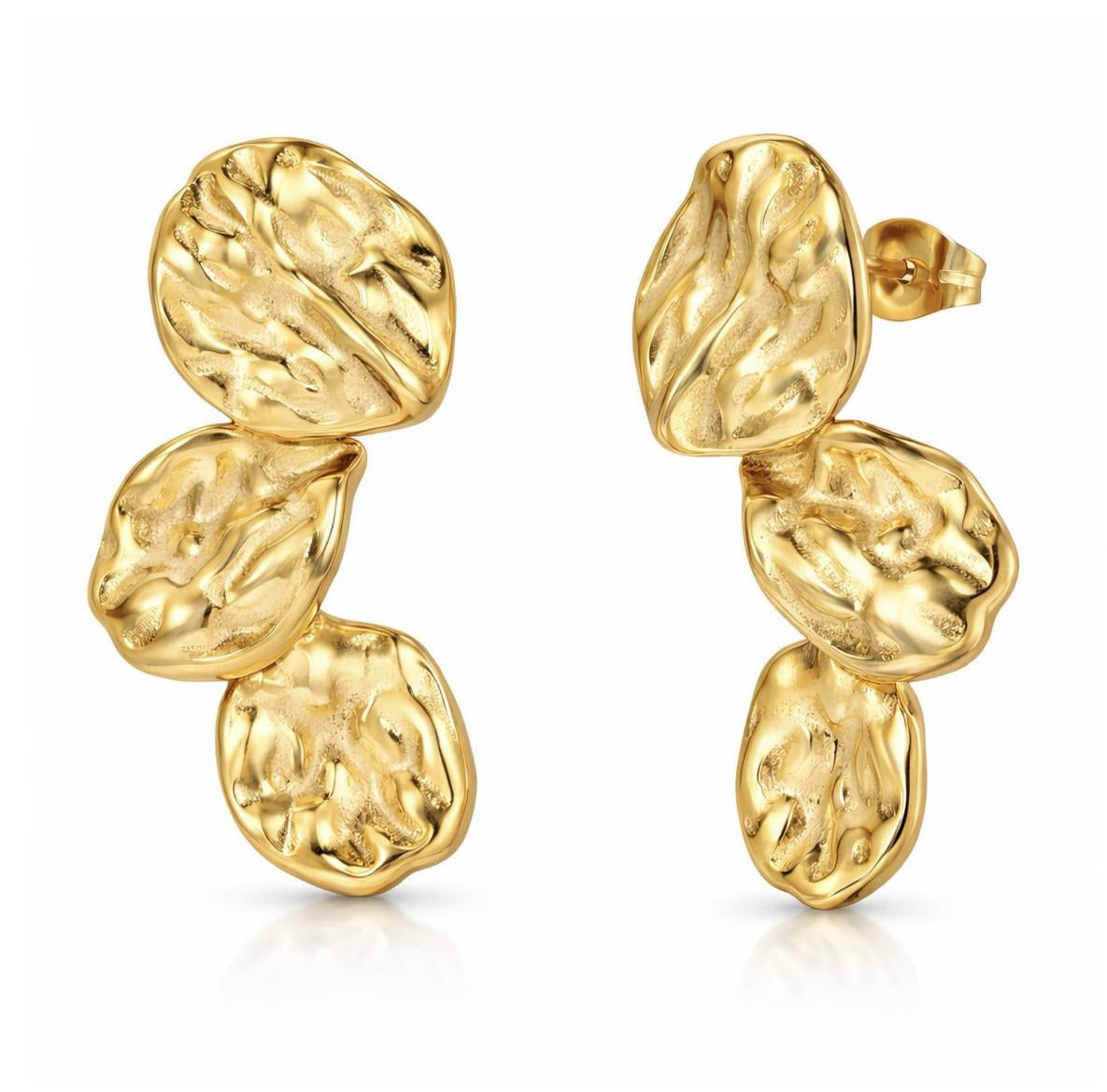
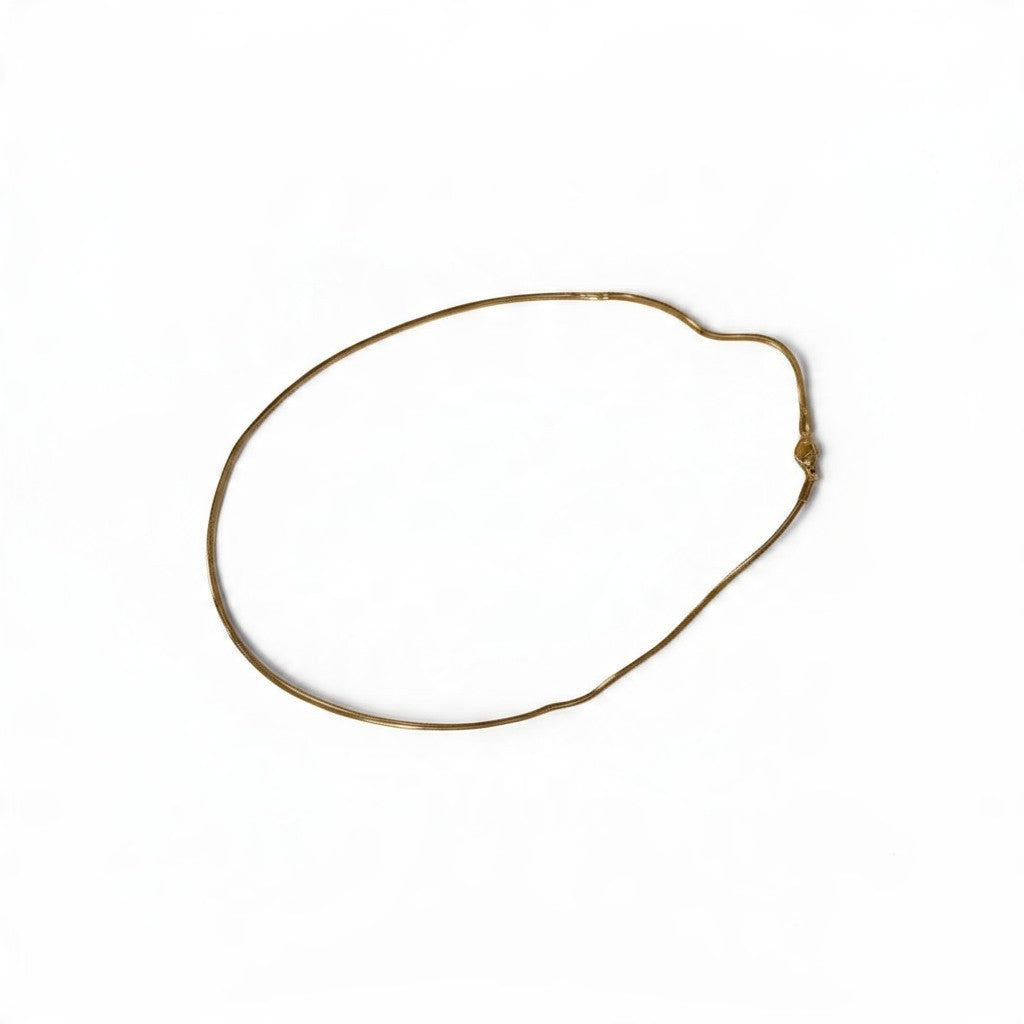
For CJ's jewelry, the choice of an 18K gold plating over a stainless steel base reflects exactly this logic — a material commitment that prioritizes daily wearability and durability over short-term production savings.
As conscious luxury has grown as a market force, it's also created space for brands to look the part without being the part. Here's a practical framework — and what satisfying answers actually sound like.
What a good answer looks like: "Our pieces are built on a 316L stainless steel base." Specific, committed, easy to find on the product page or FAQ.
What to watch for: "High-quality base metal" or simply "gold plated" with no further detail. These phrases indicate a brand that hasn't decided transparency is a priority.
What a good answer looks like: "We use 18K gold plating across all our pieces." 18K contains more gold than 14K and maintains its colour and luster longer.
What to watch for: "Gold plated" or "gold tone" without karat specification. Plating karat is not a minor detail — it directly affects the life of the piece.
What a good answer looks like: The brand can describe their production partners, their quality standards, and their approach — even at a broad level.
What to watch for: Language that gestures at craftsmanship without describing anything specific ("made with love," "artisan-inspired"). These phrases say nothing verifiable.
What a good answer looks like: Explicit care guidance on the product page, designed to extend the life of the piece — how to clean it, what to avoid, how to store it.
What to watch for: No care instructions, or care instructions buried so deep they're essentially hidden. A brand that benefits from repeat purchases has less incentive to help your piece last.
What a good answer looks like: A named program, a described mechanism, a clear link between the purchase and the impact. "A portion of every sale funds our Youth Support Program, which provides training and mentorship for African youth entrepreneurs."
What to watch for: "We give back" or "we're proud to support communities" with no program named, no mechanism described, and no way to verify. The word "community" does a lot of heavy lifting in jewelry brand marketing.
There's an important structural distinction between a brand that makes occasional charitable donations and a brand organised as a social enterprise. The difference matters more than the size of the donation.
A social enterprise uses commercial activity to pursue a social mission. The mission isn't a charitable add-on that happens after revenue comes in — it's part of the reason the business exists. In jewelry, this model is rare. Most "giving back" programs function as a percentage of profits directed outward at year's end. A social enterprise builds the mission into the product, the pricing, the team, and the community relationships from the start.
Research by WE Communications, based on a YouGov survey of 2,000 consumers, found that 40% of buyers actively factor a brand's social impact into their purchase decisions — and that willingness to support socially impactful brands is strongest among younger consumers. The same research found respondents willing to pay approximately 10% more for a product they believed had genuine, verifiable social impact.
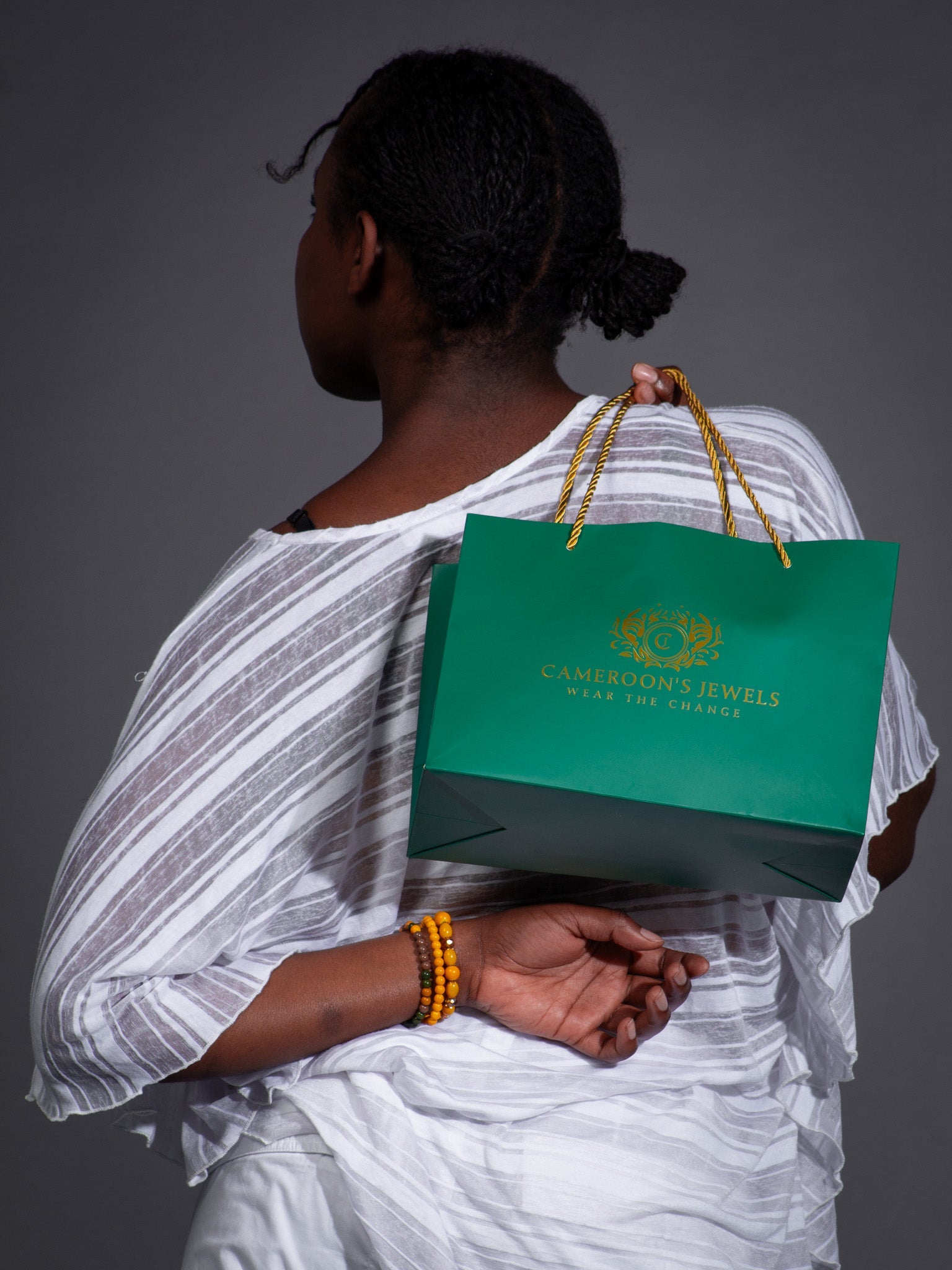
Cameroon's Jewels (CJ) operates on exactly this model. Founded in Montreal by Vadele, CJ is a modern luxury jewelry social enterprise: a portion of every sale funds the Youth Support Program (YSP), which provides training and mentorship to African youth entrepreneurs. The mission isn't a year-end donation; it's how the business is structured. When you purchase a CJ piece, the transaction is the mechanism for change.
For the conscious buyer, this matters not because it makes the jewelry more beautiful — it doesn't need to. CJ's pieces stand on their own as elevated, contemporary design built for every space in a style-forward wardrobe. It matters because a genuinely structured social enterprise means your purchase is doing two things simultaneously: adorning your life and extending opportunity in someone else's.
As conscious luxury has grown — the global sustainable jewelry market is projected to reach over $61 billion by 2032, up from $30 billion in 2024 — greenwashing has scaled alongside it. Here are three patterns that should prompt closer reading:
Vague sustainability language without standards. "Eco-conscious," "sustainably inspired," and "responsibly made" are adjectives, not standards. Unless a claim is backed by a named certification, a third-party audit, or a specific practice description, it's brand language. Some of these terms have no regulatory definition in jewelry at all.
Mission statements without mechanisms. Many brands describe a social impact goal without explaining how it's funded, measured, or executed. "We care about our communities" is a sentiment. A verifiable social enterprise will tell you which community, what the program does, and how it's financed. The absence of mechanism is usually the absence of accountability.
Material opacity. A brand that lists plating colour but not base metal, or uses "gold tone" without specifying karat, is prioritising aesthetics over transparency. These aren't disqualifying on their own — but they're signals worth pursuing.
The inverse of all three is what good looks like: a brand that publishes its base metal, plating specification, production context, and mission mechanics clearly — without being prompted — is demonstrating the kind of transparency that makes "conscious luxury" something more than a positioning statement.
If you're shopping fine jewelry — solid gold, precious gemstones — the conscious luxury framework is more established. Look for Fairtrade or Fairmined gold certification, Kimberley Process compliance for diamonds (with the caveat that this certification has known limitations), lab-grown stone options, and Responsible Jewellery Council (RJC) membership.
The fashion-fine and demi-fine segments are growing rapidly: the demi-fine jewelry market is projected to grow from $2.28 billion in 2025 to $4.87 billion by 2031, at a CAGR of 13.48%. The frameworks for evaluating values and quality in this segment are still catching up to that growth. Use the five questions above as your starting point, regardless of which segment a brand occupies.
Ethical jewelry typically focuses on material sourcing — conflict-free stones, responsibly mined metals, Fairtrade certification. Conscious luxury is a broader category: it includes sourcing, but also covers brand transparency, business model structure, material longevity, and social impact. A piece can be ethically sourced and still be built to last four months. Conscious luxury means quality and values together.
Yes — when the right factors are in place. Gold-plated jewelry built on a stainless steel base, with quality 18K gold plating, clear material transparency, and a brand with a verifiable social mission can absolutely be a conscious luxury purchase. The critical variable is longevity: a well-made piece designed for daily wear over years is a more considered choice than almost any piece designed to look good at the moment of purchase and fade by the season.
Look for specificity and structure. A genuine social mission names the program, describes the beneficiaries, explains the mechanism by which it's funded, and ideally offers some form of ongoing reporting or update. If a brand's "mission" section of their website is decorative rather than structural — vague, unlinked to the business model, and unprovable — it's worth asking more questions. A social enterprise is not the same as a brand that occasionally makes a donation.
No. The conscious luxury conversation has historically centred on fine jewelry because that's where the highest-profile ethical issues — conflict diamonds, gold mining conditions — have been most visible. But material choice, longevity design, transparent sourcing, and social mission structure are values that apply equally across price points and product categories. The fashion-fine and demi-fine segments are where this conversation most urgently needs to arrive.
The jewelry you wear isn't neutral. Each piece carries a supply chain, a set of material choices, and a business model — and in the best cases, a reason for existing that goes beyond aesthetics.
Conscious luxury doesn't ask you to compromise on beauty. It asks you to look a little deeper at what you're choosing and why. The good news: when you find a brand that has thought this through — from the base metal up to the mission — you don't have to choose between style and values. The piece on your wrist can do both.
CJ's jewelry is designed to be worn in every space and to last. The 18K gold plating over a stainless steel base reflects a commitment to quality that starts at the foundation. And the structure of the business — where a portion of every sale funds youth entrepreneurship training through the YSP — means the transaction itself is part of something larger.
Explore CJ's collections and find the piece that means something.
The Plumb Club / Rapaport — "Survey: Consumers Would Pay 'a Lot More' for Jewelry Traceability" (April 2025)
National Jeweler / World Gold Council — "70% of Consumers Are Interested in Ethically Sourced Gold" (2019)
Social Enterprise Mark / WE Communications / YouGov — "Growing Consumer Appetite for Brands with Social Purpose"
TechSci Research — "Demi-Fine Jewelry Market Press Release" (2025)
Lia Atelier — "Sustainable Jewelry Trends 2026" (citing LinkedIn / Cognitive Market Research sustainable jewelry market projection)
MachineMFG — "Does Gold-Plated Stainless Steel Tarnish?" (2025)